I feel like August just flew by. Here are the books that I read this month! Beware, there are spoilers here!
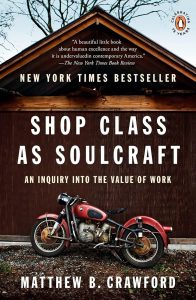

Shop Class as Soulcraft by Matthew B. Crawford – I’ve been doing a lot of exploring lately into philosophies of craftsmanship, or the religious notion of doing good work . I’ve been wanting to look at work from a spiritual standpoint for some reason, and so I’m fascinated with books on the subject right now. I feel like maybe this one fell short of what I was expecting, and that’s probably my own fault for not looking into it before deciding to read it.
I definitely felt like it had some interesting nuggets of wisdom, along with the value of working in the trades rather than choosing a career in knowledge work, or working with your hands rather than in an office, but there was a lot of things I found myself disagreeing with, too.
I found myself disagreeing with the author in particular about how you can say nearly whatever you want on a jobsite compared to in an office. I mean I’ve never worked on a jobsite, so I wouldn’t know, but I think I can safely say that if I did, I’d still not tolerate sexual harassment just because it’s boys being boys. I don’t personally feel like a change in work environment is a valid excuse to be insufferable. What do I know, though?
I feel like it did have some gems mixed in with that though, for example:
“If thinking is bound up in action, then the task of getting an adequate grasp on the world , intellectually, depends on our doing stuff in it.”
Matthew B. Crawford
I also enjoyed reading about focal practices and how the work we do today largely cuts all thought out of it, most of the time, making it feel like tedious drudgery. So much for it being “knowledge work” when there’s no thinking involved, right?
I did like that he acknowledged at least in the footnotes that there are hardships working in the trades for “the new guy, the non-white guy, and the woman.” Even though I disagreed with him on a few things, I still feel like this book was worth the time I spent reading it.

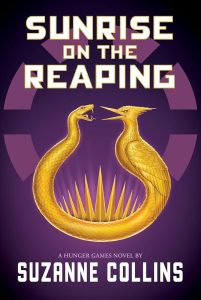
Sunrise on the Reaping by Suzanne Collins – I was very struck by the cruelty of this world as I revisited it. I really enjoyed this book, but it was also heartbreaking. Then again, how can it not be, considering the subject matter? I mean there are 48 kids that will try to kill each other in the arena… and more than 48 kids die (spoiler alert!)
All I could say at the end was “Wow, no wonder Haymitch is a drunk…” because seriously, some of the hardships these kids endure in this book are absolutely monstrous. It’s bloody, it’s gory, there are things that are just plain unfair… There are both old and new characters that we love to hate. I’m not sure how I feel about going to see the movie, because some of the deaths in this book are so bloody and horrific that I’m not sure how I will deal with seeing them on the screen. The author really does a very good job of getting the brutality of the Capitol across, along with themes of fear of the other, and how people often dehumanize their enemies.

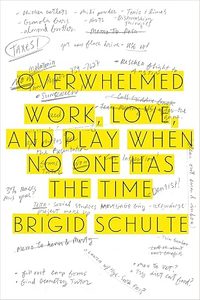
Overwhelmed: Work, Love and Play When No One Has the Time by Brigid Schulte – I read this for more of my current obsession about the nature of work and also of hobbies, and the things we choose to do with our time. I’ve been meaning to read this one for a while, and though it took me a while to get through it, I’m glad that I read it. I feel like I learned a lot from this book.
One of the things I find very relatable is of course the struggle we have to keep up with both house work and excelling at our own work. This of course is especially rampant among working women everywhere, and it can be genuinely exhausting balancing it all. I felt hopeful by the end, though, and I’ve been finding ways to rebalance my own life. I feel like the biggest problem I have is ambiguity when it comes to things I want to do. Always multitasking, the to-do list is always overwhelming and a mile long, and yet if you parse it down to just a few things, you feel guilty about all the rest.
I feel like this book was very illuminating when it comes to the reasons so many people, regardless of gender (or lack thereof) are just overwhelmed and unhappy with their lives these days. My standards for myself are very high, and yet it’s so hard to focus on things when being pulled in so many directions, so this book really had me looking at ways to simplify my own life.
“Take time to think about what you really want to accomplish in your life and what’s most important to do. Schedule time for that first.”
“Remember most of your to-do list will never get done and a lot of it belongs in ‘the other 5 percent’ column anyway.”
I feel like as Americans, it has always been ingrained in the ways we’re brought up that we should always try to excel, and that if you don’t have any ambition that you also aren’t really living… but sometimes I just want to be good enough, and I think it’s going to take a lot of practice to accept good enough, even when it makes sense to.
If I strive for the best, I inevitably never attain it and then also get bitter about it and judge myself harshly, sometimes way too harshly when I take my own skills into account. It’s kind of a crazy paradox. Then I get overwhelmed by those feelings and just stop trying altogether, and that just makes everything fail in the opposite direction. I feel like I’m also not the only person that this learning to be “good enough” will help. I know a lot of people that seem to struggle with the same thing.

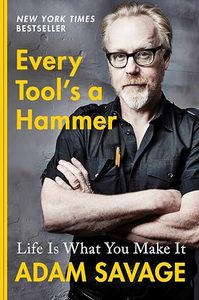
Every Tool’s a Hammer by Adam Savage – This book was actually a re-read. This was one of the first books I ever read about making (and is still one of my favorites), even though I had been familiar with Make Magazine for a long time by the time I picked it up. I have always been drawn to making things, but many different kinds of things. I love drawing and I love painting, but I also love writing, and building. I want to constantly learn new things and start new projects, but also to finish and be proud of them.
“Obsession is the gravity of making. It moves things, it binds them together, and gives them structure.”
I find Adam Savage’s enthusiasm for his projects completely infectious and I barely watched any Mythbusters. I just really enjoy how into his work he is, and I’m glad that he wrote this book. After reading Overwhelmed, it just helped me reaffirm what is truly important to me, and I think that’s a huge thing, because I have lost sight of it so often in my own life. How many other people might it help in our busy world?
“Screwing up is learning.”
I have always been the type of person to want to learn completely new things, including ones I know nothing at all about and am vastly out of my depth to learn. I feel like that moment of understanding, along with the act of actually incorporating it into my work and experiencing a sort of flow around it, losing all track of time while I work on that project, that’s one of the most wonderful feelings in the world. Also, it sort of reinforced the idea about striving to be good enough, instead of perfection, because perfection is unobtainable and you will chase it forever and never get anything done. It’s a hard lesson to learn, and I find I am still learning it, even now.

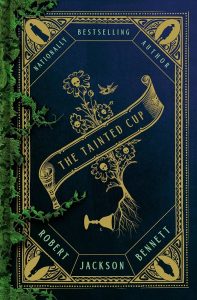
The Tainted Cup by Robert Jackson Bennett – This was the choice of the book club I enjoy over at The Lynx. It was an absolutely wonderful book. Honestly the use of such a murder weapon is a nightmarish thought to me, and the way it led to uncovering a whole conspiracy kept me guessing the whole book. Then again, some folks are much better at sorting out the whodunnit part than I am, but I definitely tried!
One thing I really enjoyed about the author’s writing was that I found it elegant, and I liked that he included neurodivergent and queer characters in what seemed to be an effortless way, when for some writers it feels forced. I also liked that despite exploring the themes of totalitarianism in the Empire, that they also find ways to incorporate people who are different, rather than alienating them.
I really enjoyed the world-building and it made me want to read more about it, so I do plan on eventually reading the other two books in this series (so far). Other people in the book club felt the same way, with some of them having already devoured the others before the meeting (and having to try their hardest to avoid spoilers!)
I felt like there were enjoyable characters all around, from the main character Din, as well as Ana, to the villains of the story. I’m intrigued by the Haza family and want to know what other things they’ve been up to. I want to know more about how the Empire functions, and about the Emperor. I’m looking forward to reading more of his work!
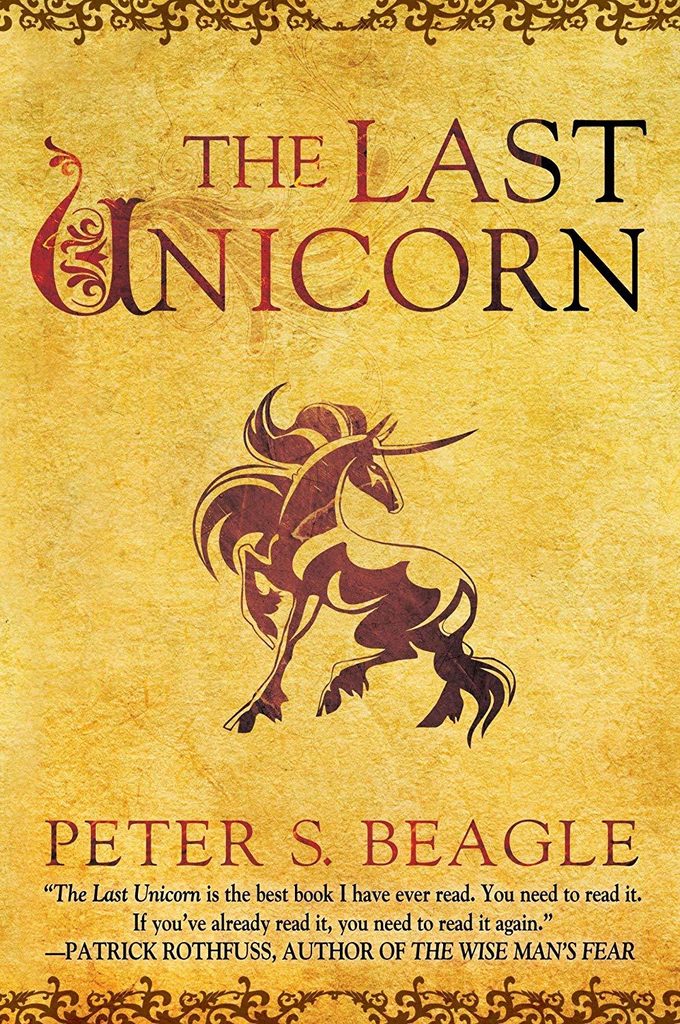
The Last Unicorn by Peter Beagle – One of my favorite books of all time, it’s unsurprising that I re-read it every few years. I’m an 80s kid, and because of that I grew up with the movie, which in it’s own ways is both beautiful and also nightmare fuel. The book is very much the same, in some ways, but even better because the characters are fleshed out more than the movie has time to do.
At the end of the book it’s always difficult for me to decide on a favorite character because I love them all, including King Haggard. I feel empathy for him, I guess, and how he takes no joy from anything but the unicorns. That seems like a miserable existence, suffering from that deep of a depression for decades and decades, and while I can’t condone his actions, suffering people do sometimes inflict that suffering on others.
I also love book Schmendrick more than movie Schmendrick, even though he’s meaner, and apparently eats dogs? I had forgotten about that part! I guess when you’re starving on the road to who-knows-where, you have to eat what you can catch.
I really enjoyed the way that Schmendrick is neither good or bad, but definitely looking out for his own people and himself, and how he gets upset at Molly when she implies otherwise, that everything he does is selfish. I also love Molly, and the way she puts up with all sorts of bullshit but also has a sharp tongue, and Lír for being enough of a romantic to try to change for somebody else, and for loving so deeply, and yet suffering from the same sort of evils his father does. I think Lír just wants someone to actually want him. I also think book Lír is much more awesome and interesting of a character than movie Lír, what with the prophecy and the way we get to see how much his father has influenced him over the years.
I’m very glad I re-read it, and I noticed small things I had forgotten, and I feel like this book is still a masterpiece even after all this time. Reading it again makes me realize how much of a hold it has had on me over the years, how many things I’ve made that have been influenced by it, how much of my own writing, even. It’s a beautiful book, and still brings me to tears in parts to this day. I recommend it to everybody.

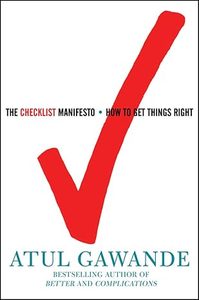
The Checklist Manifesto: How to Get Things Right by Atul Gawande – I have to say that I learned a lot from this book. I found it both amazing and scary how something as simple and useful (or useless, depending on your opinion) as a checklist can ultimately save lives. There have been times where I myself have ignored checklists in my own work, and missed some small step that would have made a world of difference, and I’m not too proud to admit that.
I picked up this book because Adam Savage recommended it in his book that I read earlier this month, Every Tool’s a Hammer. I was curious about what a book could possibly teach me about a concept that we all are exposed to on a daily basis, but I was pretty amazed at the stories about Gawande’s work as a surgeon working with WHO to save more lives, and also with stories about aviation failures and building collapses, investments gone wrong and miracles of medicine that have been performed all with the aid of such a simple method.
It’s truly amazing what we can do when we don’t let pride get in our way, and when we hold ourselves as well as others accountable. Just the numbers were mind-boggling to me, like the reduction in line infections alone, from implementing a simple checklist to make sure no steps are missed. Did you guys know that surgical fires are apparently a thing? This book got me looking more at the checklists I use, or don’t use, in my own work and thinking about how to use them myself in a way that makes things both more smooth and efficient, but also cutting down on my own errors.
Disclosure: This post contains affiliate links through Bookshop.org. If you decide to purchase one of these books through such a link, I may earn a small commission at no extra cost to you. I don’t promote books that I haven’t read personally, and my opinions of such books are my own, regardless of if I loved or hated them.
Leave a Reply